
How to Trade Microsoft (MSFT) Stock Token with USDT on WEEX

 Prefer us on Google



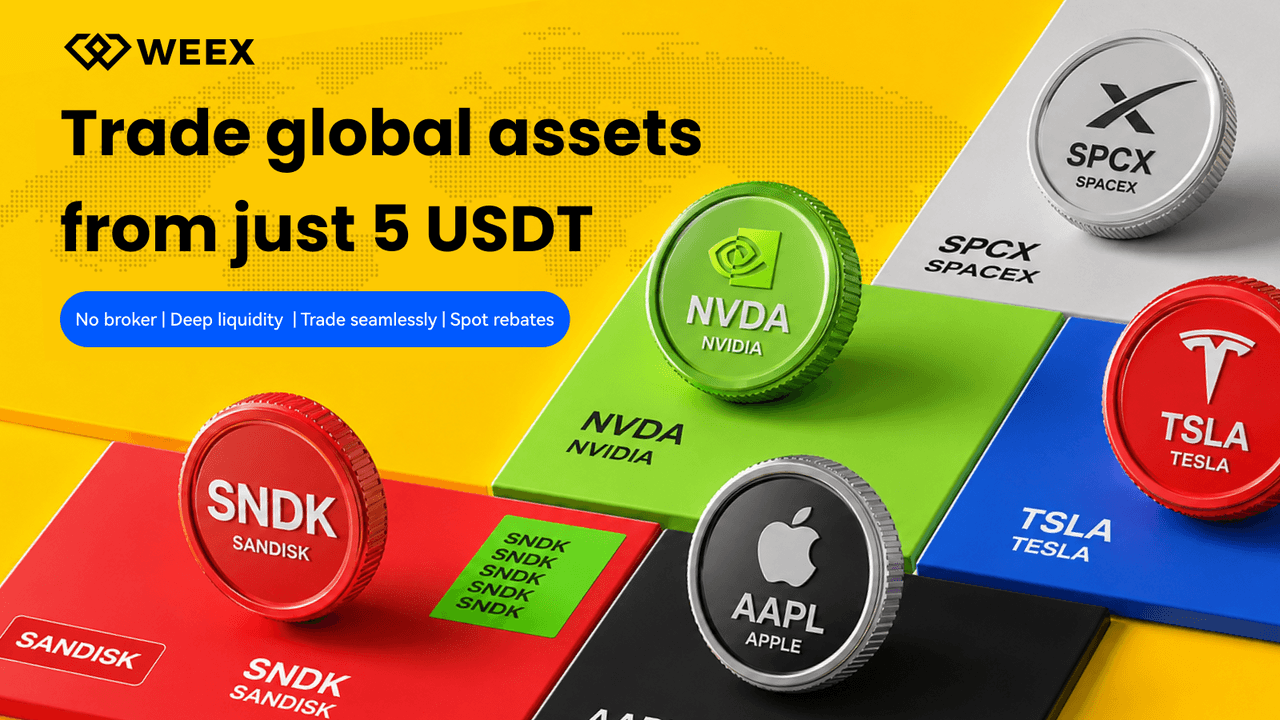
Microsoft is no longer valued only as the company behind Windows and Office. Its market performance is increasingly tied to Azure cloud demand, Microsoft 365 subscriptions, Copilot adoption and the cost of building AI infrastructure.
This gives MSFT a different trading profile from NVIDIA, Tesla and Apple. NVIDIA is closely tied to AI-chip demand, Tesla often reacts to vehicle deliveries and automation expectations, while Apple combines hardware cycles with Services revenue. Microsoft is more heavily connected to enterprise technology spending and recurring cloud and software revenue.
Through WEEX Stock Spot 2.0, eligible users can trade a synthetic token linked to Microsoft’s stock-price performance directly with USDT. No separate traditional brokerage account is required, and supported stock-token trades start from 5 USDT.
The MSFT stock token is not a real Microsoft share. It does not provide legal ownership of Microsoft stock, shareholder voting rights, participation in shareholder meetings or dividends.
Users can view the live market on the WEEX MSFT/USDT trading page.
Key Takeaways
- MSFT is marked as available in the current WEEX Stock Spot 2.0 asset list.
- Eligible users can trade the Microsoft-linked stock token directly against USDT.
- A separate traditional brokerage account is not required.
- Supported stock-token trades start from 5 USDT.
- MSFT/USDT is a price-tracking synthetic asset rather than a real Microsoft share.
- Azure growth, Microsoft 365, Copilot adoption and AI infrastructure spending are important MSFT indicators.
- Strong revenue growth does not automatically produce a higher price if spending, margins or guidance disappoint the market.
- The MSFT stock-token price is determined by the WEEX order book and may differ from the referenced Nasdaq price.
What Exactly Are You Trading with MSFT/USDT?
MSFT/USDT on WEEX is a synthetic stock-token trading pair linked to the price performance of Microsoft stock.
Microsoft’s real shares trade on Nasdaq under the ticker MSFT. A conventional investor who buys those shares through a broker obtains an equity interest in Microsoft, subject to the broker’s custody structure and the rights attached to the shares.
A user trading MSFT/USDT on WEEX does not purchase the Nasdaq-listed share. Instead, the user buys or sells a separate synthetic asset whose price is linked to Microsoft’s stock performance.
Orders remain within the WEEX trading system and are matched through the MSFT/USDT order book. They are not routed to Nasdaq or an external stockbroker.
MSFT/USDT vs. Real Microsoft Shares
| Feature | WEEX MSFT Stock Token | Real Microsoft Share |
|---|---|---|
| Referenced company | Microsoft Corporation | Microsoft Corporation |
| Trading pair or symbol | MSFT/USDT | MSFT |
| Instrument | Price-tracking synthetic asset | Company share |
| Settlement currency | USDT | Usually USD |
| Ownership of Microsoft stock | No | Yes |
| Shareholder voting rights | No | May apply |
| Shareholder meeting rights | No | May apply |
| Dividends | No shareholder dividend entitlement | May apply to eligible shareholders |
| Execution venue | WEEX stock-token order book | Nasdaq or broker-routed venue |
| Separate brokerage account | Not required | Normally required |
The phrases “MSFT stock token” and “Microsoft-linked stock token” accurately describe the WEEX product. Saying that a user directly owns Microsoft shares on WEEX would not be accurate.
-- Price
Why MSFT Needs a Different Trading Framework
Microsoft is a diversified enterprise technology company. A single product announcement may be less useful than understanding how several parts of the business work together.
The company’s major performance drivers include:
- Azure and other cloud services
- Microsoft 365 commercial and consumer subscriptions
- Copilot and other AI products
- Enterprise software contracts
- LinkedIn and Dynamics 365
- Windows and devices
- Gaming and Xbox
- Data-center capacity
- AI infrastructure expenditure
For this reason, traders evaluating MSFT may need to examine both growth and cost.
Rapid Azure or Copilot growth can support the market’s expectations, but the cost of data centers, chips, energy and other infrastructure may also affect margins and cash flow.
A Practical MSFT Earnings Scorecard
Microsoft’s earnings report contains many figures. For an MSFT trader, the following indicators often provide a clearer starting point than headline revenue alone.
| Indicator | What It Shows | Why It Matters for MSFT |
|---|---|---|
| Azure growth | Demand for Microsoft’s cloud platform | Indicates cloud and AI workload momentum |
| Microsoft Cloud revenue | Scale of the broader cloud business | Helps show whether enterprise cloud demand is expanding |
| Microsoft 365 cloud growth | Subscription and productivity-software performance | Reflects recurring enterprise and consumer revenue |
| Copilot paid seats | Commercial adoption of Microsoft’s AI tools | Helps measure whether AI is converting into paying usage |
| Capital expenditure | Spending on data centers and AI infrastructure | High spending may support future capacity but pressure cash flow |
| Operating margin | Profit retained after operating costs | Shows whether revenue growth is translating into operating leverage |
| Commercial remaining performance obligation | Contracted revenue not yet recognized | Provides information about future enterprise commitments |
| Management guidance | Expected revenue, margins and demand | Can matter more than historical results after an earnings release |
What Microsoft’s Latest Official Results Show
Microsoft reported fiscal 2026 fourth-quarter revenue of $90.0 billion, an increase of 18% year over year. Operating income reached $40.6 billion, while Microsoft Cloud revenue was $59.3 billion, up 27%.
Azure and other cloud services revenue increased 43% year over year. Microsoft also stated that annual Azure revenue surpassed $100 billion for the first time and Microsoft 365 Copilot exceeded 30 million paid seats.
For the full fiscal year ended June 30, 2026, Microsoft reported revenue of $331.8 billion, an increase of 18%, and operating income of $155.2 billion, an increase of 21%.
These figures show why cloud and AI remain central to the MSFT market narrative. They do not guarantee that MSFT or the WEEX MSFT stock token will rise. The market may also evaluate valuation, future guidance, infrastructure spending and whether growth meets prior expectations.
Source: Microsoft FY2026 Fourth-Quarter Earnings Release
How to Read Azure Growth Correctly
Azure growth is one of the most closely watched MSFT indicators, but the percentage should not be viewed in isolation.
Compare Reported and Constant-Currency Growth
Foreign exchange movements can affect the value of international revenue when translated into U.S. dollars.
Microsoft typically provides both reported growth and constant-currency growth. Comparing the two helps separate underlying business performance from currency effects.
Check Whether Growth Is Accelerating or Slowing
A high growth rate may still disappoint the market if it is lower than the previous quarter or below management’s guidance.
The direction of growth can matter as much as the absolute percentage.
Review Capacity Comments
Demand can exceed the available data-center capacity.
In that situation, slower recognized revenue does not necessarily mean customer demand has disappeared. However, capacity constraints can delay growth and require additional investment.
Consider the Cost of Supporting Growth
Azure and AI products depend on data centers, networking equipment, chips, electricity and technical staff.
Growth supported by heavy spending may be evaluated differently from growth that also improves margins and free cash flow.
How Copilot Can Affect MSFT
Microsoft uses the Copilot name across multiple products and user groups. Paid-seat growth can indicate that customers are willing to pay for AI features rather than only test them.
Traders may monitor:
- The number of paid Copilot seats
- Adoption by large enterprises
- Pricing changes
- Integration with Microsoft 365
- Usage retention
- New AI agents and tools
- The cost of serving AI workloads
A rising user count is one part of the picture. Revenue per customer, usage levels and infrastructure costs also matter.
Why Good Earnings Can Still Send MSFT Lower
An earnings report is compared with expectations, not with zero.
MSFT may fall after reporting revenue growth if:
- Azure growth is below market expectations.
- Management guidance suggests slower future growth.
- Capital expenditure is higher than expected.
- AI infrastructure costs pressure margins.
- Copilot adoption does not meet prior assumptions.
- Commercial bookings or contracted revenue weaken.
- The stock price had already reflected very optimistic expectations.
The reverse can also happen. MSFT may rise despite a mixed headline result if guidance, Azure demand or forward contracts appear stronger than expected.
This is why traders should read the full official release rather than react to one number.
When Can MSFT/USDT Experience Higher Volatility?
Quarterly Earnings Releases
Microsoft normally publishes quarterly results outside regular U.S. market hours.
The referenced MSFT share price can move quickly as traders process revenue, Azure growth, guidance and management comments.
Earnings Conference Calls
The initial price reaction can change during the conference call.
Comments about demand, data-center capacity, capital expenditure or margins may alter how the market interprets the headline results.
Major AI Announcements
New Copilot products, Azure AI services, partnerships or changes involving Microsoft’s AI investments can affect market expectations.
Cloud and Enterprise Spending Data
Industry signals about corporate technology budgets may influence expectations for Azure, Microsoft 365 and Dynamics.
Regulatory or Cybersecurity Events
Microsoft identifies cybersecurity, privacy, competition and evolving regulation among the risks to its business.
A major security or regulatory development can affect market sentiment even when short-term revenue is unchanged.
How to Plan an MSFT/USDT Trade Before Earnings
MSFT can move rapidly after an earnings release. A simple plan can reduce avoidable order mistakes.
Before the Release
Confirm:
- The official earnings date and time
- Whether the release occurs during WEEX trading hours
- Your maximum intended trade size
- The current MSFT/USDT bid-ask spread
- Available order-book depth
- Whether you prefer price control or faster execution
- The price level at which your original trading idea would no longer apply
Do not assume that strong results must lead to a higher price.
Immediately After the Release
Avoid relying only on the revenue headline.
Check Azure growth, Microsoft Cloud revenue, Microsoft 365 performance, operating income, capital expenditure and guidance together.
Liquidity can change rapidly, so review the live order book before submitting a market order.
During the Conference Call
Watch for management commentary about:
- Cloud and AI demand
- Data-center capacity
- Infrastructure investment
- Copilot adoption
- Enterprise contracts
- Operating margins
- The following quarter’s outlook
If the new information changes your original thesis, reassess the trade rather than following the first price move automatically.
How to Trade MSFT/USDT on WEEX
Unlike the earlier step-by-step guides, the following is a condensed execution path for users already familiar with WEEX spot trading.
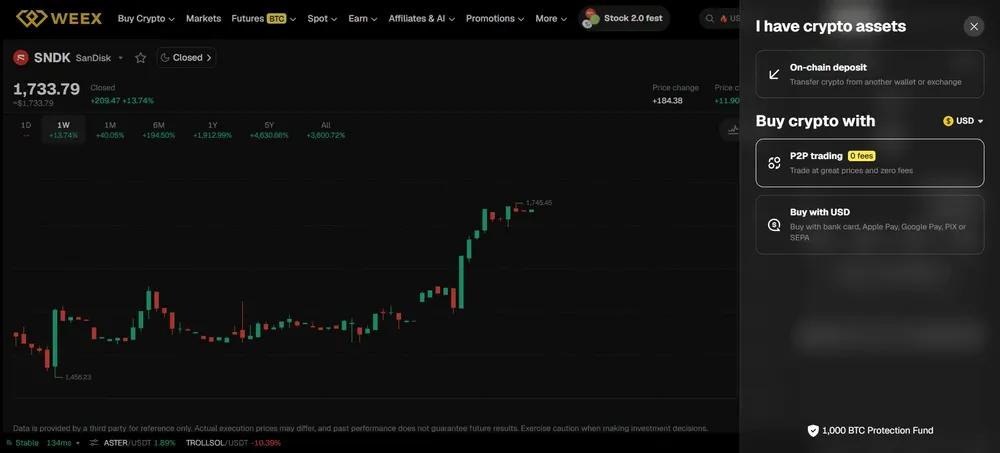
Step 1: Open the MSFT Market
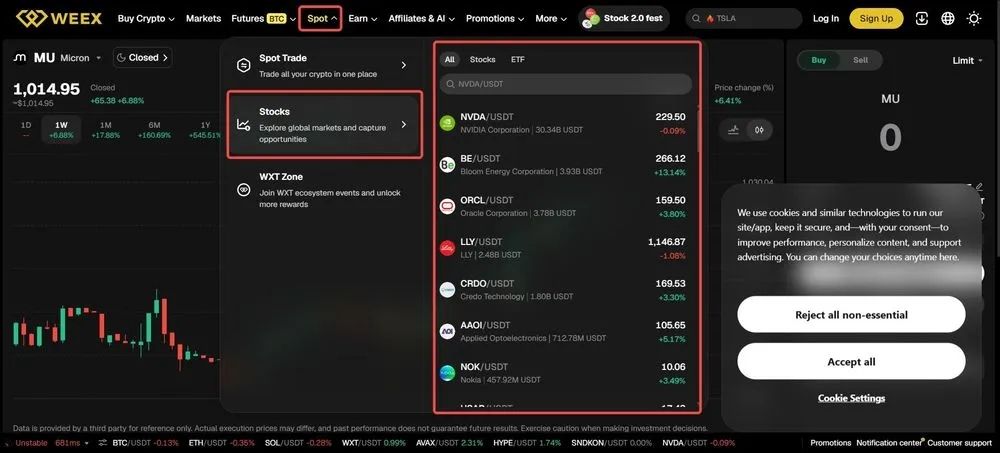
Visit the WEEX MSFT/USDT trading page.
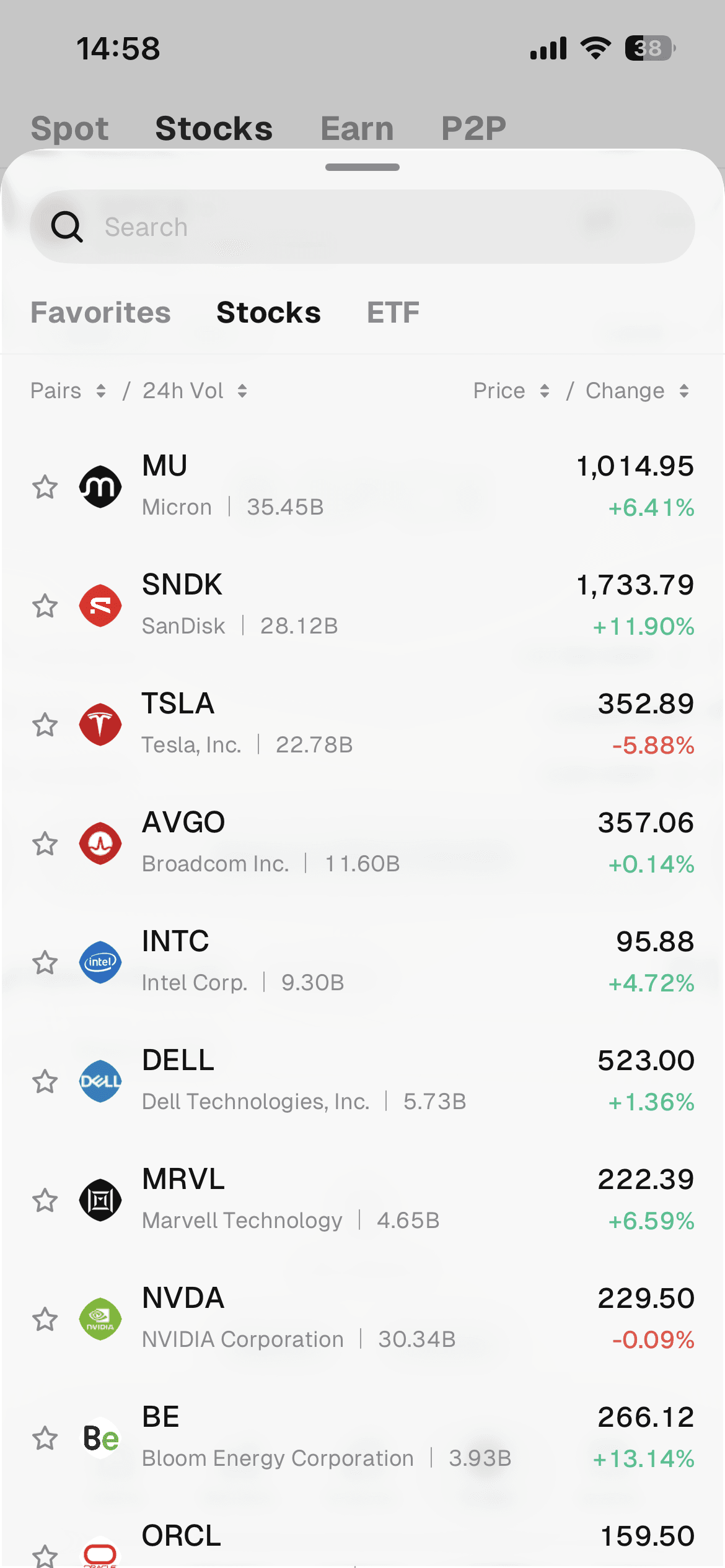
In the WEEX App, tap Trade, switch to Stocks, and search for “MSFT” or “Microsoft.”
Step 2: Verify the Instrument
Confirm that the selected pair is MSFT/USDT.
Remember that it is a synthetic stock token linked to Microsoft’s price performance, not a real Nasdaq-listed share.
Step 3: Check the Market Conditions
Review:
- Current price
- Recent price movement
- Bid-ask spread
- Order-book depth
- Trading status
- Available USDT balance
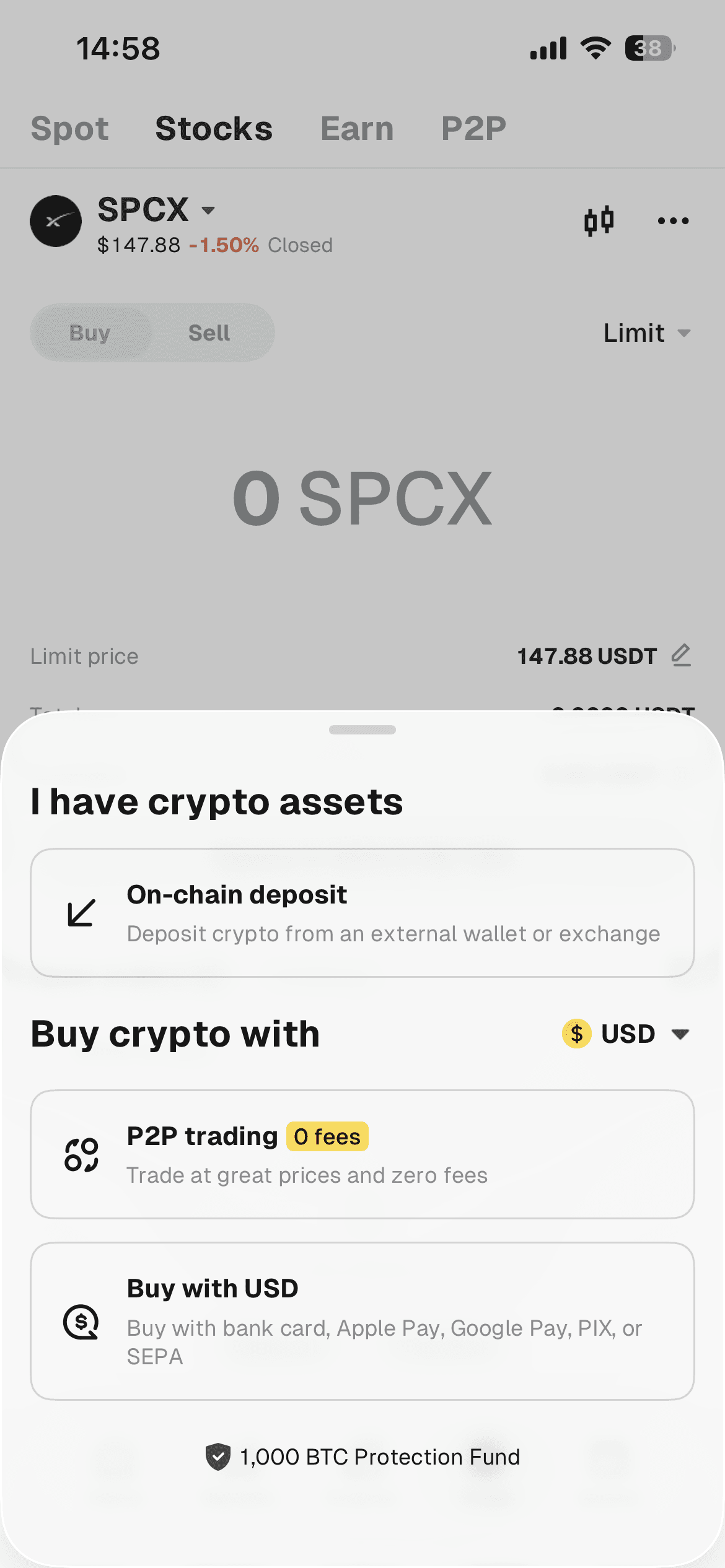
If the available balance is insufficient, use Deposit or Transfer.
Step 4: Choose the Order Type
Select Buy or Sell, then choose a market or limit order.
A market order prioritizes execution using available order-book prices. A limit order sets the maximum Buy price or minimum Sell price you are prepared to accept.
Around earnings, a limit order may provide greater price control, although it may not execute.
Step 5: Enter and Review the Order
Enter the MSFT quantity or total USDT amount.
Supported stock-token trades start from 5 USDT.
Before submitting, check:
- MSFT/USDT
- Buy or Sell
- Market or Limit
- Price
- Quantity
- Total value
- Available balance
【插入图片:新手教程-image5.png|WEEX App股票代币下单区域】
Step 6: Monitor the Result
Use Current Orders to monitor an unfilled or partially filled limit order.
Use Order History to review completed or canceled orders. An unfilled order can be canceled, but an already executed portion cannot be reversed through order cancellation.
【插入图片:新手教程-image6.jpeg|WEEX App当前委托和历史委托页面】
Market Order vs. Limit Order for MSFT
| Situation | Order Type to Consider | Reason |
|---|---|---|
| Normal session with sufficient liquidity | Market or Limit | Choice depends on execution speed versus price control |
| Before an earnings release | Limit | Defines the acceptable price before volatility increases |
| Immediately after earnings | Limit | Can reduce exposure to sudden order-book changes |
| Wide bid-ask spread | Limit | Helps avoid accepting an unfavorable available price |
| Small test trade | Limit or Market | Allows the user to learn the interface with a smaller amount |
| Thin order book | Limit | Reduces the risk of consuming several price levels |
This table is not a recommendation to trade. The appropriate order type depends on the user’s objective and current market conditions.
When Can You Trade MSFT/USDT?
According to the supplied WEEX Stock Spot 2.0 product materials, stock-token trading is open:
Monday through Friday, 08:00–24:00 UTC
In UTC+8, this corresponds to:
16:00 through 08:00 the following day
The window covers the U.S. pre-market, regular trading and after-hours sessions.
Scheduled closures include:
- Monday through Friday from 00:00 to 08:00 UTC
- Saturday 00:00 UTC through Monday 08:00 UTC
- U.S. stock-market holidays
Always check the live MSFT/USDT trading page for current availability.
Why Can MSFT/USDT Differ from the Nasdaq MSFT Price?
The WEEX stock token and the real Microsoft share trade in separate markets.
The MSFT/USDT execution price can be affected by:
- Liquidity in the WEEX order book
- The bid-ask spread
- The size of the order
- Market demand
- Pre-market or after-hours conditions
- Rapid movement in the referenced Microsoft share price
- Temporary differences in price updates
A synthetic price-tracking relationship does not guarantee identical execution prices at every moment.
Risks of Trading the MSFT Stock Token
No Ownership of Microsoft Shares
MSFT/USDT does not give the user ownership of real Microsoft stock.
Token holders do not receive shareholder voting rights, shareholder meeting rights or Microsoft dividends.
Cloud and AI Expectation Risk
MSFT’s valuation can reflect high expectations for Azure and AI.
Even strong growth may disappoint the market if it falls below forecasts or requires more spending than expected.
AI Infrastructure Spending Risk
Microsoft makes substantial investments in data centers and other infrastructure.
These investments may support future growth, but they may also affect cash flow, expenses and margins.
Price-Tracking Risk
The WEEX token price may differ from the referenced Microsoft share price because it trades through a separate order book.
Liquidity and Slippage Risk
A thin order book or wide spread can result in a less favorable execution price, especially for a market order.
Extended-Hours Risk
Liquidity may be lower during pre-market and after-hours trading. Price movements may also be sharper.
USDT Risk
Because MSFT is traded against USDT, the position includes risks associated with the settlement asset.
Platform and Account Risk
Users should protect their accounts with available security controls and never share passwords or verification codes.
Jurisdictional Risk
Product availability depends on the user’s jurisdiction, verification status and account eligibility.
Do not access the product where it is restricted.
MSFT/USDT Pre-Trade Checklist
Before submitting an order, confirm that:
- The trading page is MSFT/USDT.
- You understand that the product is a synthetic stock token.
- You are not expecting ownership of real Microsoft shares.
- Identity verification has been completed.
- The product is available in your jurisdiction.
- The WEEX stock-token market is open.
- Your account has sufficient available USDT.
- You have checked the current bid-ask spread.
- You have reviewed the order-book depth.
- You know whether Microsoft has recently released earnings or guidance.
- You have considered Azure growth and infrastructure spending together.
- The selected Buy or Sell direction is correct.
- You understand the selected order type.
- The entered price, quantity and total value are correct.
Conclusion
MSFT/USDT provides eligible WEEX users with synthetic exposure to Microsoft’s stock-price performance using USDT.
The product can be accessed without opening a separate traditional brokerage account, and supported stock-token trades start from 5 USDT.
Evaluating MSFT requires more than watching general AI headlines. Azure growth, Microsoft 365 cloud revenue, Copilot adoption, enterprise contracts, infrastructure spending, margins and management guidance can all affect the market’s response.
The WEEX MSFT stock token is not a real Microsoft share. It does not provide ownership, voting rights or dividends, and its actual execution price is determined by the WEEX order book.
Users should review the live spread, liquidity, trading session and order details before submitting a trade.
Frequently Asked Questions
1. Can I Trade Microsoft with USDT on WEEX?
Eligible users can trade the Microsoft-linked MSFT stock token against USDT through WEEX Stock Spot 2.0.
2. Where Can I Trade MSFT/USDT?
Users can access the pair through the WEEX Stocks section or the MSFT/USDT trading page.
3. Is MSFT/USDT a Real Microsoft Share?
No. MSFT/USDT is a price-tracking synthetic asset. It does not represent ownership of a Nasdaq-listed Microsoft share.
4. Do I Need a Brokerage Account to Trade MSFT/USDT?
No separate traditional brokerage account is required. Users need an eligible WEEX account, completed identity verification and an available USDT balance.
5. What Is the Minimum Amount Needed to Trade MSFT?
According to the supplied WEEX product materials, supported stock-token trades start from 5 USDT.
6. Does the WEEX MSFT Stock Token Pay Dividends?
No. Holding the synthetic MSFT stock token does not provide the dividend entitlement associated with holding eligible real Microsoft shares.
7. What Indicators Can Affect the MSFT Stock Token Price?
Azure growth, Microsoft Cloud revenue, Microsoft 365 performance, Copilot adoption, AI infrastructure spending, margins and management guidance can influence market expectations for MSFT.
8. Why Can MSFT/USDT Differ from Microsoft’s Nasdaq Price?
The stock token trades through a separate WEEX order book. Liquidity, spreads, market demand, trading sessions and order size can create price differences.
9. Is MSFT/USDT Available 24/7?
No. WEEX stock-token trading follows specified weekday hours and closes during defined off-hours, weekends and U.S. stock-market holidays.
10. Is MSFT Included in the Champion-Stock Prediction Campaign?
MSFT/USDT is not included among the 10 designated pairs shown on the current official champion-stock activity page. Users should not assume that an MSFT/USDT trade qualifies for that specific task.
This content is provided for general informational purposes only and doesn't constitute financial, investment, legal, or tax advice. Any events, rewards, online promotions, or related information mentioned herein should not be considered a recommendation, solicitation, or invitation to purchase, sell, trade, or otherwise deal in any crypto assets. Crypto assets are highly volatile and may result in loss. The availability of WEEX services, products, and related events may vary by region. You are responsible for ensuring that your participation is in accordance with applicable local laws and regulations.
You may also like
How to Trade Apple (AAPL) Stock Token with USDT on WEEX
Crypto Futures Trading Explained: Leverage, Funding, Liquidation
Crypto Futures Trading: Leverage, Funding and Apple Perps
How to Trade Tesla (TSLA) Stock Token with USDT on WEEX: A Trading Guide for Beginers in 2026
How to Trade NVIDIA (NVDA) Stock Token with USDT on WEEX
How to Trade U.S. Stocks Without a Brokerage Account Using USDT

Nike Stock Price Prediction 2026: What the $50 Target Actually Requires to Happen
CLARITY Act Enters a Critical Window: What the September 15 Senate Vote Actually Means

What Are Spot Stock Tokens? How Synthetic Stock Trading Works

XST Coin Price Bounced 19% Off a New Low in Hours: Is This the Bottom or Just Noise?

What Is the WEEX Mini App? A Lightweight Way to Trade Inside Telegram
XST Coin Price Crosses Into Deep Capitulation Territory: What a 90%+ Decline Actually Signals

CyberLeek Is Trending—but Why Are People Searching for CYBERLINK?

Nvidia After-Hours Stock Price: What Moved NVDA After the Earnings Report?

Crypto Futures Liquidation in Pakistan: How It Works and How to Manage Risk
Bank Account Freeze Risk for Crypto Traders in Pakistan 2026
Crypto Tax in Pakistan: What FBR Rules Mean for PKR Traders
Humanity Protocol Unlocked 266 Million H Tokens Today—Where Did They Go?
DGAI Has Trading Volume but No Reported Circulating Supply—So What Is Its Real Market Cap?
MORTY After Viral Meme Rally: Overvalued or Growth Story?

Best Futures Exchange in Pakistan for 2026? What Leverage, Liquidity, and Liquidation Risk Actually Require
XST Coin Liquidity Risk: What Low DEX Depth Actually Means for Buyers Who Want to Exit

MSTR Stock Surges 12% in a Single Session: What Strategy Inc's Bitcoin Treasury Model Actually Amplifies
Is SOXL a Good Investment? What 3x Leverage Actually Does to Your Returns in Both Directions
XST Coin and Stargate: What XSolut's AI Infrastructure Narrative Has to Do With the $500 Billion OpenAI Project
XST Coin Rebounds From Its Post Peak Low: What the Recovery to a $45M Market Cap Actually Signals
Why Did Sahara AI (SAHARA) Drop? The 600M Token Transfer, Tokenomics and What Comes Next
Can XST Crypto Reach $0.10? XSolut Price Prediction 2026
USDT vs BTC Settlement for Crypto Broker Partners: Which Currency Is Better for Your Business
Before Swapping XSolut (XST): How to Check Liquidity, Price Impact, and Failed-Trade Risk 2026
How to Trade Apple (AAPL) Stock Token with USDT on WEEX
Crypto Futures Trading Explained: Leverage, Funding, Liquidation
Crypto Futures Trading: Leverage, Funding and Apple Perps
How to Trade Tesla (TSLA) Stock Token with USDT on WEEX: A Trading Guide for Beginers in 2026
How to Trade NVIDIA (NVDA) Stock Token with USDT on WEEX
How to Trade U.S. Stocks Without a Brokerage Account Using USDT
Contents
Popular coins
Latest articles


