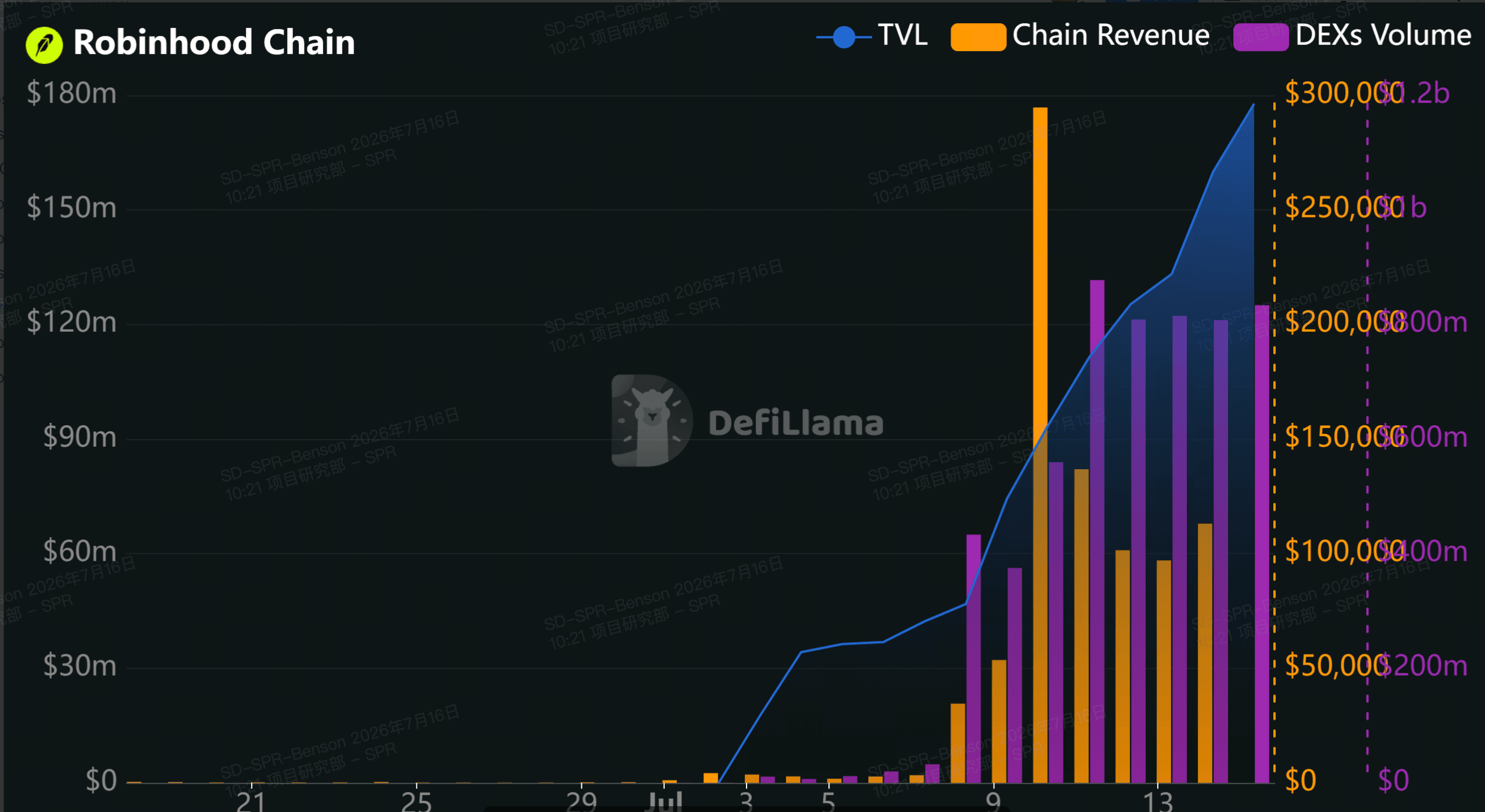
This article traces the evolution of the Robinhood Chain ecosystem, highlights key projects, and identifies potential risks in the two weeks since its launch, seeking to answer one question: Once the meme craze subsides, can RWA truly take the baton?
On July 1, 2026, the Robinhood Chain mainnet officially launched. This Ethereum Layer 2, built on Arbitrum Orbit, originally focused on on-chain finance, RWA tokenization (stocks such as NVDA, AAPL, etc.), DeFi, and AI-native applications, with the goal of seamlessly migrating the traditional trading habits of Robinhood’s 27.7 million retail investors onto the blockchain.
However, the script took a turn faster than anyone could have imagined.
Robinhood Chain’s trajectory has almost exactly mirrored the rise of Base and Solana back in the day: before the mainstream narrative could even take hold, a viral meme coin—CASHCAT—single-handedly revitalized the entire ecosystem.
It’s safe to say that meme coins accounted for over half of the trading volume, effectively transforming what was supposed to be an “RWA L2” into an “on-chain Las Vegas.”
Interestingly, RWA assets—which were originally supposed to take center stage—currently account for less than 1% of the total TVL, with the remaining liquidity almost entirely driven by the meme craze. To veteran crypto investors, this cold start is a “classic playbook”: when you need to build momentum and liquidity quickly, there’s no more effective stepping stone than a leading meme coin.
Robinhood Chain Hotspots at a Glance
As the leading token, CASHCAT, solidified its
market cap above $100 million, on-chain capital began rotating toward the second tier, and competition for the runner-up spot gradually heated up. Here are some of the most representative tokens currently on the Robinhood Chain:
The leading meme coin in the Robinhood Chain ecosystem. Named after Robinhood’s former mascot, it skyrocketed after being endorsed by founder Vlad, the Uniswap founder, and well-known influencer Ansem, among others, and now accounts for nearly 60% of the chain’s total meme market cap.
This token’s core narrative is extremely simple—Vlad once mentioned in an X reply that this was his personal favorite meme character. The community seized this opportunity to transform his personal preference into a Robinhood-themed meme narrative, which quickly resonated with users and went viral.
Derived from the legendary character Hoodrat in Matt Furie’s Night Riders comic, it naturally aligns with the “hood” in Robinhood.
Launched by the CTO of SKI—a token that previously reached a market cap of hundreds of millions of dollars on the Base chain—and drawing on the cultural reference to the film character Wishbone, who once played Robin Hood. The narrative surrounding the project primarily centers on the “team’s track record” and its positioning as the “Robinhood native meme coin.”
Robinhood has launched a program allowing eligible U.S. customers to authorize AI agents to execute crypto trades. Project Vex has capitalized on the hype surrounding Robinhood Chain’s “AI-native” and “Agentic Trading” narratives, making it one of the few differentiated projects that currently combines both narrative and utility attributes.
A financial concept token built around the narrative of tokenized stocks, with a name that directly references the concept of “indexes” in traditional financial markets.
A launchpad platform for creating and deploying tokens, launched by RootsFi developer Ozzy (@MEADGod). The deployer has transferred ownership and transaction fees to Ozzy; these fees will later be used for buybacks and burns to enhance community trust.
Robinhood Chain’s “Growing Pains”
As evident from the ecosystem landscape described above, in the current climate of relatively scarce liquidity, meme coins serve as a “stepping stone” for new chains to gain traction quickly. Robinhood deeply understands the ironclad rule of the crypto world that “attention equals liquidity,” using meme mania to mask the initial barrenness of its ecosystem and successfully transferring the traffic formula from traditional finance to Web3.
So the question arises: As the marginal benefits of CASHCAT diminish and on-chain scams—such as honeypot schemes and account hacking—begin to surface, can the RWA narrative take the baton from memes and retain these 27.7 million traditional retail stock investors?
In my view, Robinhood’s biggest trump card is its massive user base of traditional finance customers. If it can establish a closed-loop conversion path from “U.S. retail stock investors → on-chain wallets → RWA assets” in the future—enabling investors accustomed to fragmented trading to seamlessly access on-chain DeFi and the stock tokenization market—this may be the true moat that sets Robinhood Chain apart from other Layer 2 solutions.
Finally, I recommend that investors continue to monitor the progress of RWA implementation within this ecosystem and the pace of incubation for native DeFi projects. At the same time, remember to do your own research (DYOR), make rational decisions, and trade prudently amid the speculative frenzy.
Further Reading:


 Prefer us on Google