
How Data Centers Become the Growth Engine of the U.S. Power Grid

 Prefer us on Google


Commercial customers, including a broad category of data centers, are expected to consume more electricity this year than residential customers for the first time.
Overview The electricity consumption of U.S. commercial customers (including data centers) is expected to surpass that of residential customers for the first time this year.
There is a growing opposition from various sectors of society against large tech companies building data centers, raising questions about the future expansion of the U.S. artificial intelligence industry. However, the situation is clearer for the power grid: data centers are undoubtedly the largest source of growth in electricity demand.
Data centers are consuming electricity at an unprecedented rate, ending decades of stagnation in electricity demand and fundamentally changing the structure of electricity consumption in the grid.
According to the U.S. Energy Information Administration (EIA), nationwide, the electricity consumption of commercial customers (a broad category that includes data centers) is expected to exceed that of residential customers this year.
Data centers for artificial intelligence, cloud computing, and cryptocurrency mining, as well as office buildings and shopping centers, are classified by the EIA under commercial electricity consumption. Residential and industrial electricity (factories, refineries, agriculture, etc.) are the other two major consumption categories.
The following outlines the entire process by which the AI boom is reshaping the U.S. power industry. {#quote_AEP}
Changing Electricity Consumption Patterns
EIA data shows that U.S. electricity consumption was essentially flat from 2010 to 2017. After that, the situation began to change. From 2018 to 2025, overall electricity consumption in the market is expected to grow by 6%, primarily driven by a 9% increase in commercial electricity consumption.
States like Texas have seen the most significant increases in electricity consumption, driven by the booming computing industry and the electrification of oil field operations, which together have significantly boosted local electricity use. New Mexico has also connected oil fields to the public grid. Iowa has a large data center market, with industrial expansion occurring simultaneously; Oregon has developed an important data center industry corridor.
As of last year, 23 states and Washington D.C. had commercial electricity consumption exceeding that of residential electricity. Texas, Ohio, and Nevada (where data center markets are rapidly expanding) are the latest regions to experience this reversal; prior to this, Oklahoma achieved a reversal in 2024, while Oregon and Nebraska completed theirs in 2023.
Virginia hosts the largest number of data centers globally, and since 2011, the electricity consumption of commercial customers in the state has exceeded that of households, with commercial electricity accounting for about 59% of total sales in the state.
Starting in 2023, the federal government and utility companies began reclassifying many data centers and cryptocurrency mining facilities: previously classified as industrial electricity due to their high consumption, many facilities are now being adjusted to fall under commercial electricity consumption.
The Electric Power Research Institute estimates that data centers currently account for 4%-5% of total electricity consumption in the U.S.; the institute predicts that by 2030, this share could rise to 9%-17%.
Will Data Center Construction Slow Down?
Data tracking agency Cleanview reports that there are currently 577 data centers under construction in the U.S., with a total installed capacity of about 58 gigawatts. This represents a massive electricity load, approximately six times the peak electricity consumption of New York City.
Of this capacity, the vast majority (about 38 gigawatts) consists of projects that started construction in the past 12 months as of October; over 20% of these are concentrated in Texas.
However, new construction projects stalled this summer. The slowdown coincided with widespread societal resistance to AI, partly due to public concerns about the enormous electricity consumption of data centers.
In the midterm elections in November, voters cast ballots against the expansion of artificial intelligence, supporting measures aimed at limiting or slowing the development of data centers. Stocks across the power sector, from power generation companies to equipment manufacturers, came under pressure as a result.
Cleanview founder Michael Thomas stated, "In the coming months, we will see whether the summer's decline is merely a temporary pause or the beginning of a substantial slowdown, the latter of which would have far-reaching implications for the global economy and stock markets."
Utility Companies Significantly Increase Capital Expenditures
On one hand, power companies are upgrading aging power grids and enhancing their resilience against extreme disasters, while on the other hand, they are rewriting capital expenditure plans to address the surge in electricity demand.
Some power companies deeply involved in the large data center and industrial markets, including American Electric Power (AEP), Wisconsin Energy (WEC), and DTE Energy in Michigan, have raised their five-year capital budgets by 20%-30%.
American Electric Power (AEP), which operates across 11 states including Texas and Ohio, recently increased its capital expenditure plan from $78 billion to $100 billion.
This power company holds power purchase agreements totaling 35 gigawatts, equivalent to the output of approximately 35 nuclear reactors. Under such agreements, even if large electricity consumers like data centers do not expand their business as expected, they are still required to pay for the power capacity they have applied for.
-- Price
This content is provided for general informational purposes only and doesn't constitute financial, investment, legal, or tax advice. Any events, rewards, online promotions, or related information mentioned herein should not be considered a recommendation, solicitation, or invitation to purchase, sell, trade, or otherwise deal in any crypto assets. Crypto assets are highly volatile and may result in loss. The availability of WEEX services, products, and related events may vary by region. You are responsible for ensuring that your participation is in accordance with applicable local laws and regulations.
You may also like

2 Asset Manager Stocks to Buy That Each Oversee More Than $1 Trillion

Reuters Survey Shows South Korean Central Bank May Raise Rates to 3.25% on Thursday

CFO Colette Kress Just Made This Subtle Shift That Could Save Nvidia Shareholders

Michael Saylor: Strategy's Cash Reserves Can Cover Financial Obligations for Over Three Years

Federal Reserve's "Number Three": Inflation Still Below Target, Gradual Action Needed

Investing 1000 Dollars in JEPQ Could Yield 1480 to 4046 Dollars in 10 Years
Is AMD's Stock in Trouble After a Concerning Short-Seller Report?

White House reviews final CFTC prediction market rule

Should You Buy Marvell Technology Stock Before Dec. 1?

Cross River Bank Launches Bitcoin-Backed Loans

3 Unstoppable AI Stocks to Buy Hand Over Fist Before the End of 2026

This Tech Wreck Looks Just Like 2018. Back Then, Here's What Happened Next.

SpaceX Sued in Oregon and Virginia: AI Generates Explicit Pornographic Images

Nvidia's 10-Q Is Delayed. Here's What I'm Looking for When It Lands.

Former Pharmacist's $875 Million Startup Deal Quickly Goes Sour: Is This 'Acquisition Kill'?
Bitcoin hedges could expire an hour before ETF trading resumes on Black Friday
Best Buy Reports Earnings Tomorrow. Here's What Investors Should Be Watching.

Bitcoin’s blockchain keeps growing as its live ledger sheds 25 million entries

Big Short Names Apple, Costco, and Walmart as Early Safe-Haven Targets Amid Market Collapse

a16z: Do Mathematicians Still Have a Place When AI Solves Centuries-Old Mathematical Problems?

UBS Capital Requirements Debate Enters Critical Phase as Swiss Parliament Discusses Additional Capital

100% Probability of Fed Rate Hike: Why This Will Be 100% Bad News
Is the AI bubble bursting? Dell and Workday set to disclose earnings
Stock Market Sell-Off: Here's My Honest Take On What Every Long-Term Investor Should Do Right Now

Bitcoin’s smallest miners face a decade-old payout problem that may require middlemen
How did Revolut, valued at $115 billion, become a challenger to banks?

Optimum’s mump2p cuts Ethereum block propagation spread by 53%

Anthropic Increases Lobbying Investment in Australia to Promote AI Copyright Rules and Lay Out Computing Power Investments
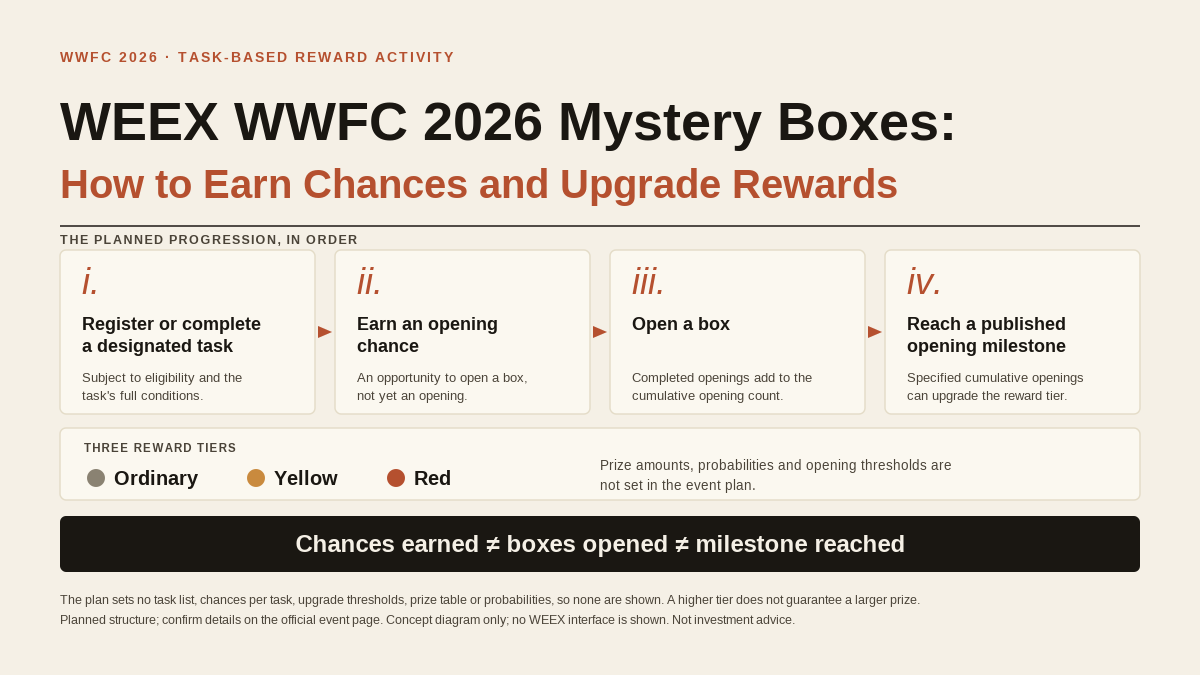
WEEX WWFC 2026 Mystery Boxes: How to Earn Chances and Upgrade Rewards
Explore WEEX WWFC 2026 mystery boxes: how to earn opening chances, understand three reward tiers, and track cumulative openings toward reward upgrades.

Trump Willing to Collaborate with Democrats to Set Limits on Credit Card Rates and Fees
2 Asset Manager Stocks to Buy That Each Oversee More Than $1 Trillion
Reuters Survey Shows South Korean Central Bank May Raise Rates to 3.25% on Thursday
CFO Colette Kress Just Made This Subtle Shift That Could Save Nvidia Shareholders
Michael Saylor: Strategy's Cash Reserves Can Cover Financial Obligations for Over Three Years
Federal Reserve's "Number Three": Inflation Still Below Target, Gradual Action Needed
Investing 1000 Dollars in JEPQ Could Yield 1480 to 4046 Dollars in 10 Years
Latest articles


Latest coin listings on WEEX


