
Borrowing to Buy Food: The Reality of American Life

 Prefer us on Google
Author: Li Kaun Pacific Standard Time 2026-11-23 12:35 PM | Reading time 5 minutes
The "beep" from the card reader at the checkout no longer sounds pleasant. Each beep harshly reminds people that grocery expenses this Thanksgiving have risen by 32% compared to 2020, according to the U.S. Bureau of Labor Statistics. A mother shopping with her daughter told reporters, "It feels like all my money is spent on food."
The U.S. Department of Agriculture no longer publishes reports on food insecurity as it once did. However, existing data shows that nearly 14% of Americans reported having trouble affording meals in 2024. This Thanksgiving, many are still struggling to make ends meet.
Consumer shopping choices are changing. Discount chains like Aldi, Lidl, and Food 4 Less are gaining market share, creating fierce competition for traditional supermarkets like Kroger.
Aldi's Chief Operating Officer, David Rinaldo, stated: "In the past, shopping at discount supermarkets felt embarrassing. But this year, Aldi plans to open 150 new stores. I never thought discount grocery stores would become so mainstream, and people are willing to shop at these streamlined discount stores." Aldi's private label Simply Nature products
Private labels are a major attraction. These products are produced by manufacturers specifically for discount supermarkets and are no longer the unknown cheap brands of the 70s and 80s; their quality has significantly improved. At Aldi, private label products account for as much as 92% of the shelves.
Rinaldo noted that private labels are no longer an exception but a trend in the industry. "In nine out of the last ten years, the growth rate of private labels has exceeded that of national brands."
It's not just where to buy groceries that is changing; the payment methods are also evolving. Research from the Urban Institute shows that about 63% of people in the Washington area use credit cards to purchase groceries. Unlike previous years, a quarter of consumers are unable to pay off the debt incurred from food purchases.
Cassandra Martinchek, a senior research associate at the Urban Institute, said, "A significant number of families have to rely on credit cards to buy groceries, leading to debt. She warned that besides credit cards, Buy Now, Pay Later (BNPL) platforms (such as Klarna, Splitit, Affirm, Sezzle, Zip) are also increasingly being used to purchase food.
These Buy Now, Pay Later applications usually have very low or even no interest. The same survey showed that one in ten Americans uses them to buy groceries, but more than a third of these users have experienced late payments.
Martinchek stated, "These tools can address immediate survival needs, but they pose risks to future financial stability and living conditions."
Jordan Williams is a mother engaged to be married, with a two-year-old child named Mika. While still a single mother, she used Buy Now, Pay Later software to purchase groceries, but gradually fell into late payments. "For a while, it felt like an endless rat race; I could never keep up with the repayment schedule."
She fell into a cycle of credit, always carrying debt: "I simply couldn't afford to pay for groceries outright because I was always repaying the bills from my last grocery purchase."
After falling behind, her account was locked, and to continue shopping, she had to pay off all her debts at once. "I couldn't come up with $200 to buy groceries back then, and I still can't come up with $160 now; the software just won't work. After 30 days of being overdue, your credit score will also be affected."
Like millions of ordinary Americans, Williams thought she shouldn't have to worry about food with her income. She holds a master's degree, teaches English at the University of North Carolina at Greensboro, and works part-time as a social media influencer. "If it were just a 28-year-old who was bad at managing money, that would be one thing. But if I'm struggling this much, what must others be going through?"
The reality is not optimistic. Gas prices have started to fall, but grocery prices remain high.
At the end of each month, Williams feels the pressure: "Payday is the 28th, and if it's only the 24th, we have to get by tightly."
This year, she plans to host a Thanksgiving potluck. Nowadays, very few can bear the cost of hosting family and friends alone; everyone has to share the expenses.
The only hopeful news is that the rate of food price increases is expected to slow down by next Thanksgiving. But for many ordinary people, the warm and prosperous Thanksgiving scene depicted by Norman Rockwell remains an ideal rather than a reality.
This content is provided for general informational purposes only and doesn't constitute financial, investment, legal, or tax advice. Any events, rewards, online promotions, or related information mentioned herein should not be considered a recommendation, solicitation, or invitation to purchase, sell, trade, or otherwise deal in any crypto assets. Crypto assets are highly volatile and may result in loss. The availability of WEEX services, products, and related events may vary by region. You are responsible for ensuring that your participation is in accordance with applicable local laws and regulations.
You may also like
The Ethereum Foundation prioritizes post-quantum migration

Where can Bitcoin count toward a US exchange’s operating reserves?

Japan Tightens Cryptocurrency Tax Audits, Tokyo Tax Bureau Pursues 3.9 Billion Yen in Undeclared Income
Compass Group Plans to Relocate Main Listing to the U.S.

SBI Chairman Kitao Proposes Separate Taxation and Acceleration of Cryptocurrency ETFs

The Perpetual Futures Market Is Booming. That Might Not Be as Bullish for Hyperliquid as Some Investors Think.

Anthropic's IPO Sparks ETF Issuance Surge: 16 US ETFs Offer Leveraged Long, Inverse Short, and Options Income Strategies

Xiaomi Reports Q3 Revenue of 107.2 Billion Yuan, Adjusted Net Profit Plummets 56.8%, Automotive and AI Business Operates at a Loss of 3.4 Billion Yuan
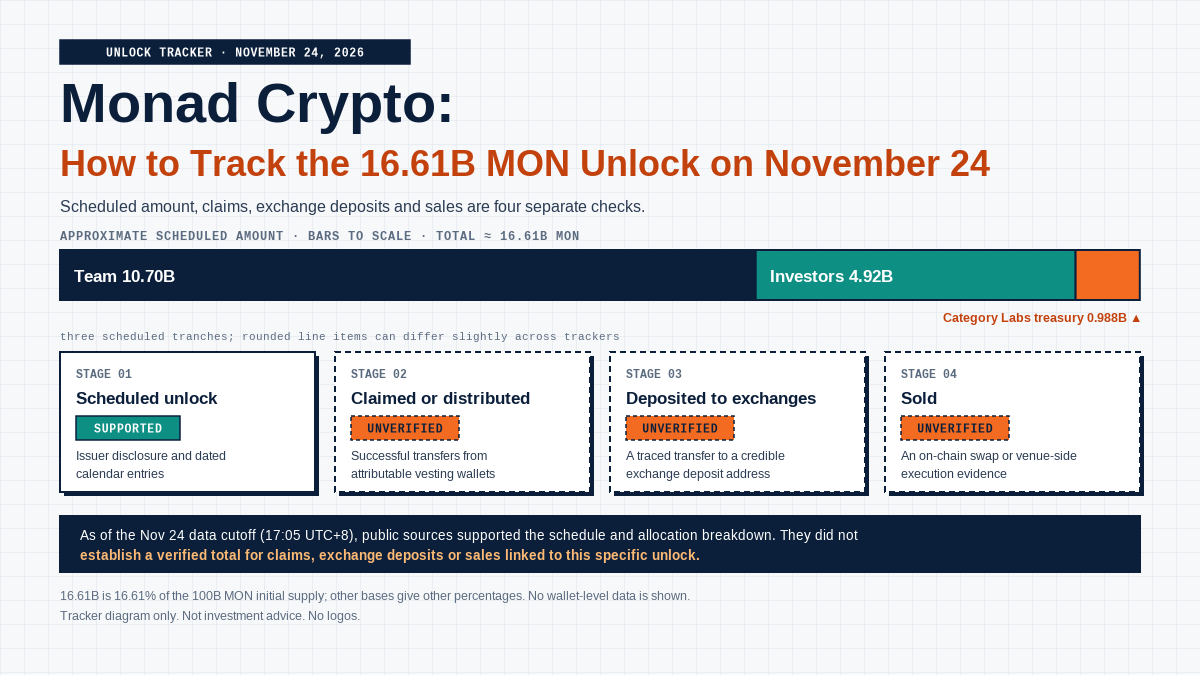
Monad Crypto: How to Track the 16.61B MON Unlock on November 24
Track Monad’s 16.61B MON unlock on November 24. See the team, investor, and treasury allocations, and learn how to verify claims and exchange deposits.

CFTC Allows Bitcoin and Ethereum as Operating Reserves: Will It Boost Crypto Markets?

Why France Faces Recession Risks and What Factors Could Help It Avoid a Downturn

Signal Partners with United Airlines and Several Banks to Limit AI Agents Due to Customer Risk Issues

Prediction: Alphabet Will Be the World's Most Valuable Company by 2031

Bitcoin’s next crash may come from holders, not leverage, as $10.7 billion gets liquidated

0G Foundation pledges disclosure review after Upbit trading warning
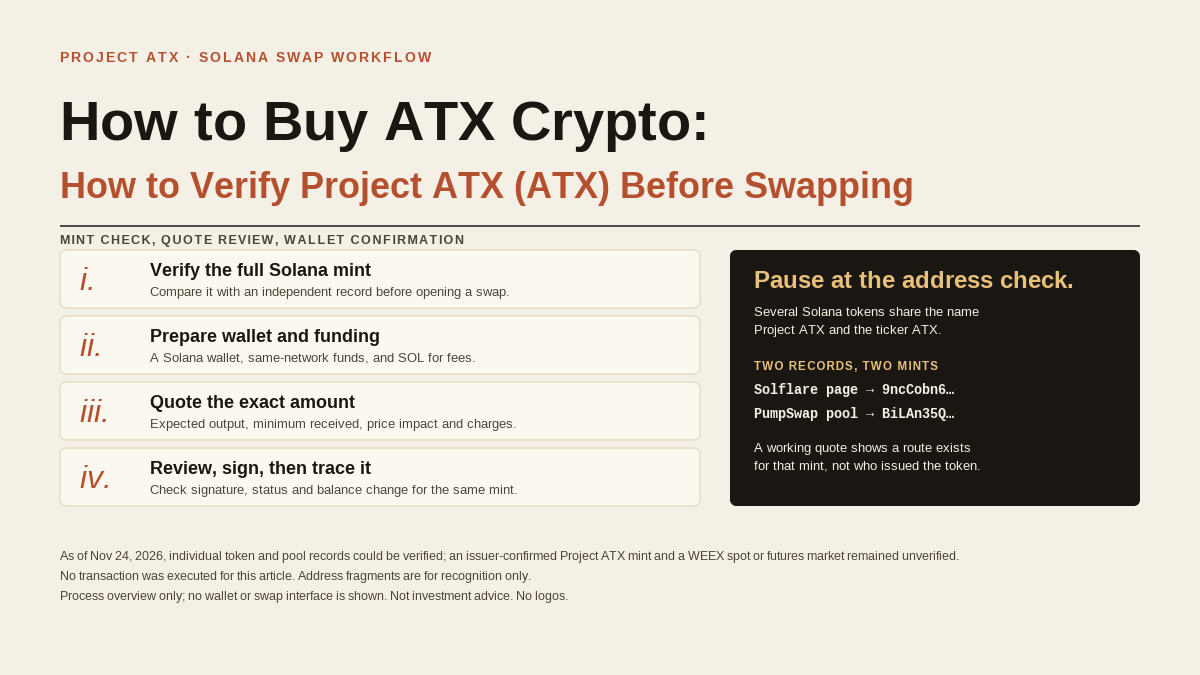
How to Buy ATX Crypto: How to Verify Project ATX (ATX) Before Swapping
Learn how to buy ATX crypto on Solana. Verify the Project ATX mint, review swap quotes and fees, and confirm the exact token you receive on-chain.

Why Is the ATX Crypto Price Different Across Platforms? Project ATX (ATX) Explained
See why the ATX crypto price varies across platforms. Compare Project ATX mint addresses, PumpSwap pools, and swap quotes for the same trade size.

Interpretation of South Korea's Digital Asset Law Proposal: ICO Ban Lifted, Banks to Lead Stablecoin
Tiger International's Q3 Customer Assets Surpass $64.8 Billion, Setting New Records in Hong Kong Market Net Inflows of Nearly $1 Billion
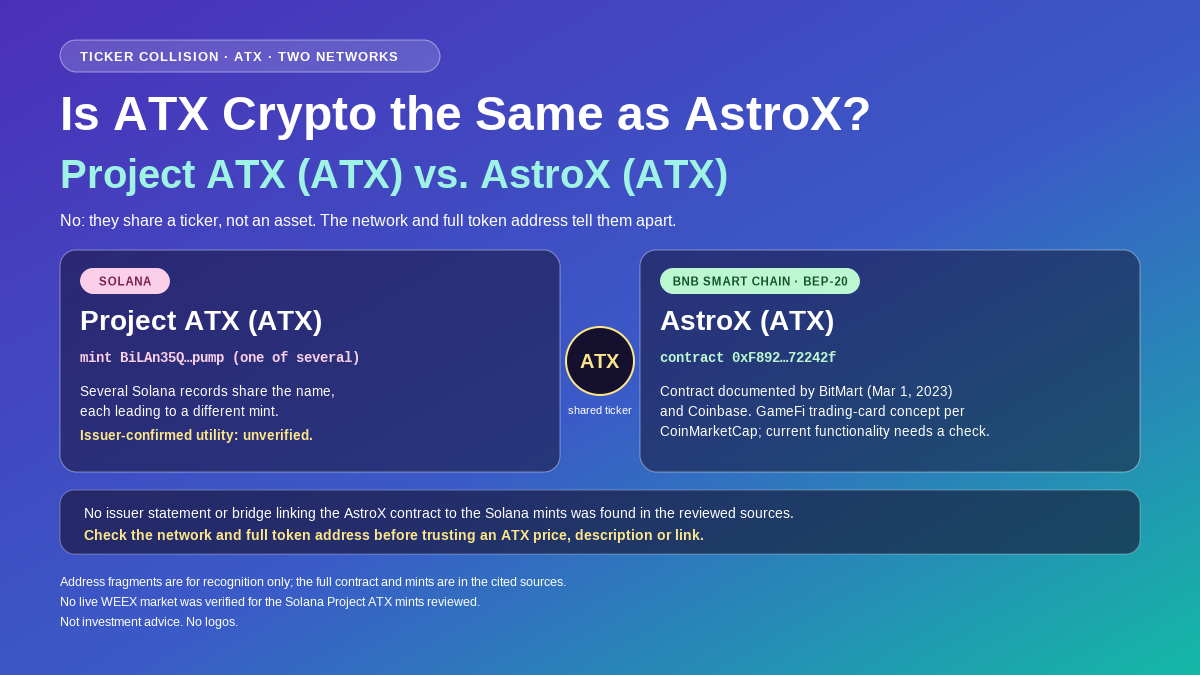
Is ATX Crypto the Same as AstroX? Project ATX (ATX) vs. AstroX (ATX)
Compare Project ATX on Solana with AstroX on BNB Smart Chain. Learn how to verify each token address before trusting an ATX price or buying guide.

Binance to suspend crypto withdrawals across all networks on Nov. 25
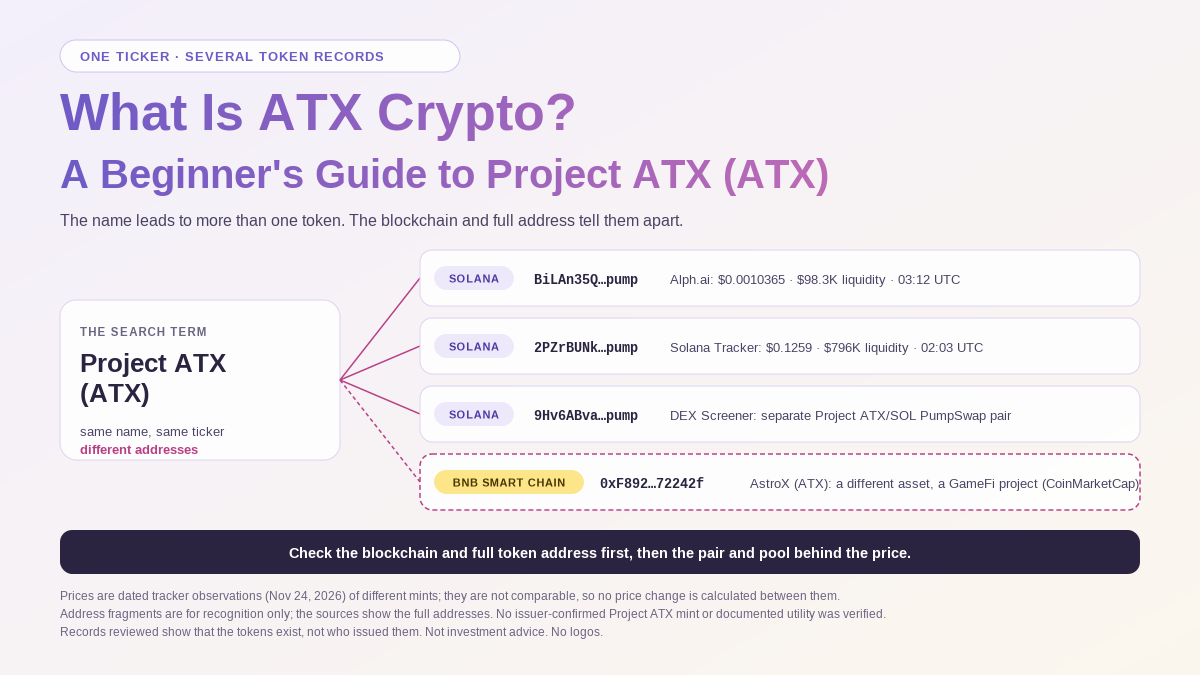
What Is ATX Crypto? A Beginner’s Guide to Project ATX (ATX)
Learn what ATX crypto means, why Project ATX appears under multiple Solana mint addresses, and how to tell those tokens apart from AstroX (ATX).
Bayer Signals Future Pharmaceutical Deals May Target Mid-Stage Clinical Assets

Arthur Hayes: Nvidia's Stock Surge is Bad News for Cryptocurrency, US Stocks Need to Decline for Fed's Liquidity Supply

Ethereum ETF: $96 million in net inflows stop the November bleeding

Stanford’s encryption breakthrough could unlock a new era for Bitcoin

These 13 Crypto Projects Are All Trying to Survive

AI Agents in Payments: Cards Dominate, Yet Stablecoins Fill the 'Gap'|a16z Frontier

European Fertilizer Suppliers Shut Down Factories Due to Soaring Energy Prices

SharkNinja to Join S&P 500 Before Market Opens on December 2, AES to Be Removed
The Ethereum Foundation prioritizes post-quantum migration
Where can Bitcoin count toward a US exchange’s operating reserves?
Japan Tightens Cryptocurrency Tax Audits, Tokyo Tax Bureau Pursues 3.9 Billion Yen in Undeclared Income
Compass Group Plans to Relocate Main Listing to the U.S.
SBI Chairman Kitao Proposes Separate Taxation and Acceleration of Cryptocurrency ETFs
The Perpetual Futures Market Is Booming. That Might Not Be as Bullish for Hyperliquid as Some Investors Think.
Latest articles
Latest coin listings on WEEX


