
Circle CEO Jeremy Allaire: Arc Is Even Bigger Than USDC

 Prefer us on Google

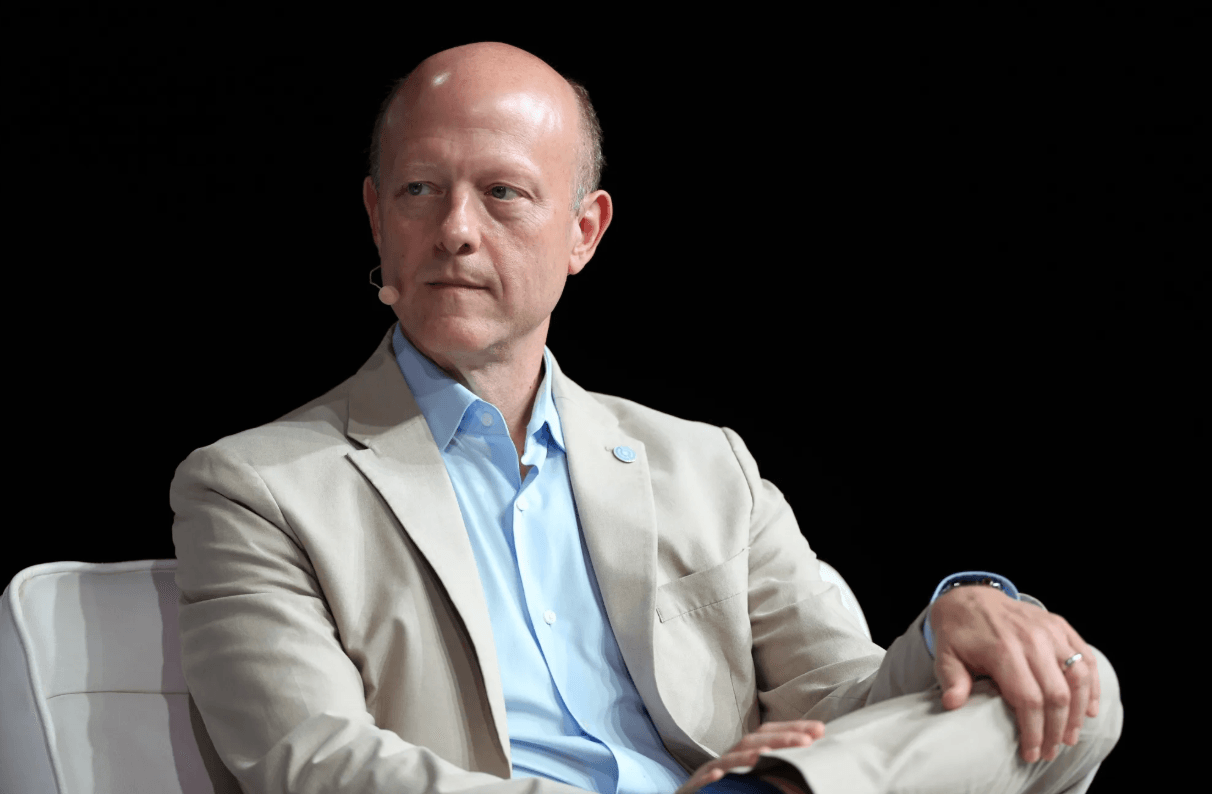
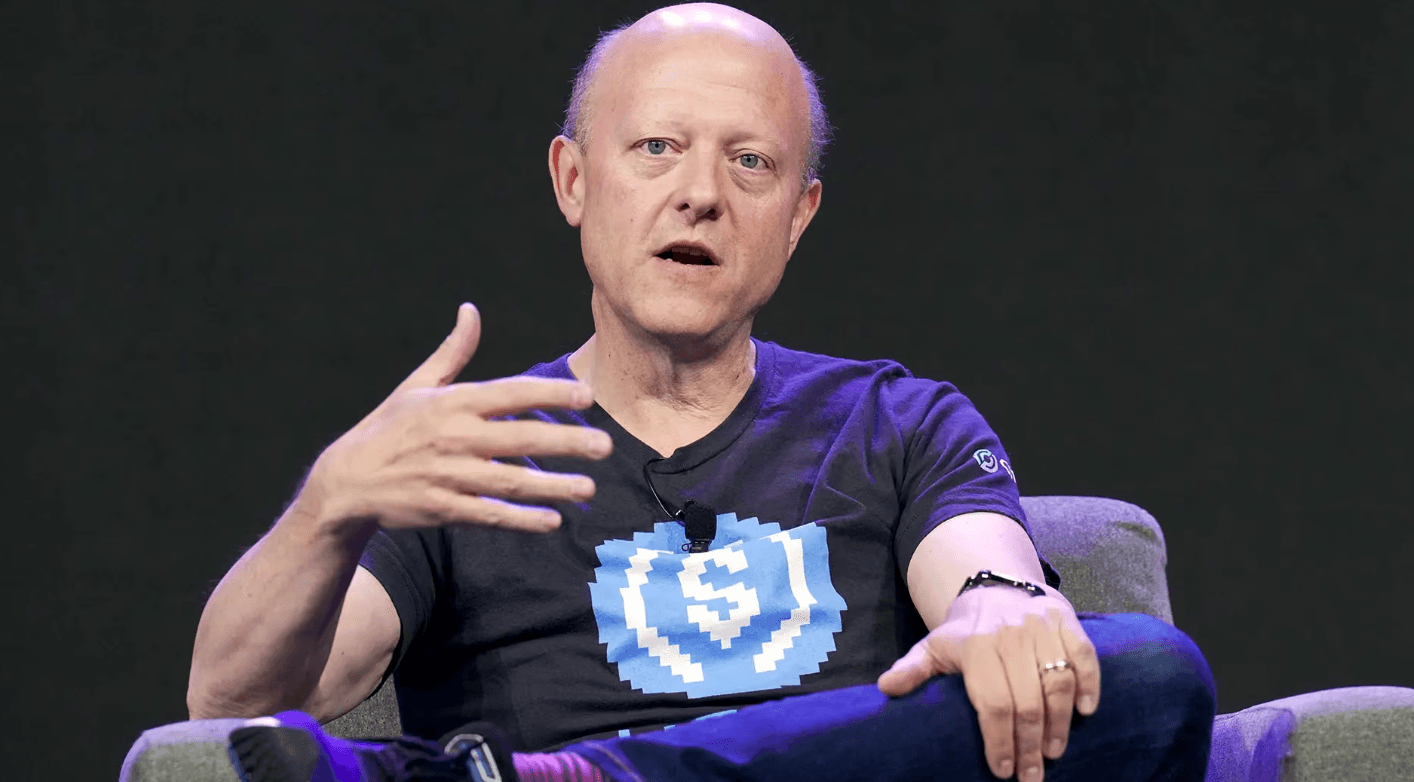
Circle CEO Jeremy Allaire made a striking claim on September 16: "This is, I believe, the most consequential major platform launch in our history, and I think an even more consequential launch than USDC itself."
That's how the Circle CEO described Arc's mainnet launch during a press briefing, and it's a genuinely bold thing to say. USDC is the product that built Circle into a publicly traded company, currently circulating at roughly $73.3 billion and generating the bulk of the firm's revenue through reserve income. For the Circle CEO to call a brand new, unproven blockchain more consequential than the asset that made Circle what it is requires understanding exactly what he's actually betting on, not just the quote itself.
What Allaire Has Actually Been Saying, and For How Long
Wednesday's launch-day statement wasn't a spontaneous burst of enthusiasm. Allaire had been building toward this exact framing for months. During Circle's second quarter earnings call in August, he described Arc as one of the most "massive" opportunities the company has ever encountered, and said explicitly the opportunity was potentially bigger than the company's $70 billion USDC stablecoin business. "This is the birth of a new operating system layer for economic activity in the world," he told analysts at the time, adding that "we believe over the next three to five years, the opportunity set exists for these to become very large scale infrastructures on the internet."
That's a consistent thesis stated twice, roughly six weeks apart, once to investors on an earnings call and once to the press at the actual mainnet launch. The consistency matters: this isn't a CEO improvising hype in the moment of a product launch. It's a specific, repeated claim about where he believes Circle's actual long-term value sits, made across two very different audiences with two very different incentives for skepticism.
Why Allaire Thinks the Margins Tell the Real Story
The specific reasoning behind Allaire's claim traces back to how Circle actually makes money today versus how Arc could change that. Circle's stablecoin business is fundamentally a reserve income model: USDC in circulation gets backed by Treasury bills, and Circle earns yield on those reserves. That's a real business, but it's also one increasingly under competitive pressure. A group of 21 financial institutions including Bank of America, Citi, and Goldman Sachs is preparing its own dollar backed stablecoin for the first half of 2027, a European bank consortium called Qivalis is working on a euro denominated token, and payments giant Stripe is pushing deeper into the space with its own Open USD stablecoin and the Tempo blockchain it incubated with Paradigm.
Arc represents a different kind of business entirely: infrastructure, not just an asset. Rather than competing purely on whose stablecoin banks and institutions choose to hold, Circle is positioning itself as the company that owns the rails those stablecoins, whichever issuer's version wins, could eventually settle on. Allaire made this distinction directly on the earnings call, telling analysts that the "compounding effects" of the network's adoption across real-world asset activity, stablecoin usage, and transaction fees made Arc "an incredibly attractive thing to invest in," specifically citing margin characteristics as "very attractive" compared to the reserve income model USDC runs on.
What Actually Backs This Claim Beyond Rhetoric
Bold claims from CEOs at product launches are common enough that they don't automatically carry weight on their own. What makes Allaire's specific claim worth taking seriously is the institutional commitment that showed up alongside it. Arc's founding validators include BlackRock, DTCC, Intercontinental Exchange, Mastercard, Standard Chartered, and Visa, with more than 100 institutions and ecosystem companies, including BNY, HSBC, and State Street, either live on the network or actively exploring it, according to Phemex's coverage of the launch.
That roster matters specifically because these institutions aren't simply accepting USDC as a stablecoin they'll hold. They've committed operational resources to running validating infrastructure for Circle's own blockchain, a categorically different kind of commitment than integrating with an existing asset. Arc launched supporting trading venues including Uniswap and Aerodrome, lending markets from Aave and Morpho, and tokenized money market funds including Circle's own USYC and BlackRock's BUIDL, with the Circle Payments Network and StableFX platform integrated for cross currency settlement. crypto.news framed the significance of this directly: "the stablecoin company that spent a decade convincing Wall Street to trust USDC is now asking that same Wall Street to run its blockchain nodes. And Wall Street said yes."
-- Price
Why Allaire Was Willing to Fund This Bet Before Proving It
Conviction backed by capital reads differently than conviction backed only by words. Allaire closed $222 million in a presale for Arc on May 11, 2026, at a $3 billion fully diluted valuation, according to Phemex's profile of his career. The investor syndicate reads like a cross-section of traditional finance rather than a typical crypto raise: a16z crypto led with $75 million, joined by BlackRock, Apollo Funds, Intercontinental Exchange (the parent company of the New York Stock Exchange), SBI Group, Standard Chartered Ventures, Janus Henderson, ARK Invest, and Bullish.
That raise happened months before Arc's mainnet actually proved anything in production, meaning these investors committed capital based substantially on Allaire's specific thesis: that the next phase of stablecoin growth isn't primarily about issuing more USDC, but about owning the underlying rails USDC and other stablecoins ultimately run on. Circle's own share price reaction to the raise reinforced that read from public markets too, jumping more than 15% the day the funding was announced.
Why This Framing Makes Sense Given Allaire's Own Pattern
This isn't the first time Allaire has bet a company on infrastructure rather than a single product. Phemex's profile of his career identifies a consistent pattern across every company he's built: he commercializes infrastructure rather than consumer-facing apps, and he enters a market right as it's about to scale, shipping a product before the industry's standards are even fully set. His first company, ColdFusion, got distribution because the web itself was a new category. USDC got distribution because stablecoins were a new category. Arc, under this same pattern, is a bet that institutional onchain finance is now becoming a category of its own, one still forming rather than already mature.
That pattern doesn't guarantee Arc succeeds, but it does mean Allaire's claim that Arc matters more than USDC isn't a departure from how he's operated throughout his career. It's a continuation of the same strategic instinct that built the company generating the revenue he's now willing to describe as secondary to something bigger.
What Would Actually Prove Allaire Right
None of this settles whether Arc genuinely becomes more consequential than USDC, and Allaire's own words don't resolve that question on their own. What would actually validate the claim is a specific set of outcomes still ahead: real settlement volume flowing through Arc from the institutions that committed as validators, not just their operational presence as a credibility signal; USDC's own circulating supply growing meaningfully faster because Arc removes friction that previously limited institutional adoption; and the eventual transition to proof of stake in 2027 actually generating the kind of fee driven economics Allaire described as having "very attractive" margins.
Circle's own recent quarterly results add some texture to how urgent this bet actually is. USDC in circulation reached $73.3 billion, up 19% year over year, and on-chain transaction volume surged 151% to $14.8 trillion, according to Benzinga's coverage of the same earnings call where Allaire first made his "bigger than USDC" claim. Those are strong underlying numbers for the business Allaire says matters less than what comes next, which is precisely what makes his claim worth testing against Arc's actual performance rather than simply repeating it.
Conclusion
Jeremy Allaire's claim that Arc is more consequential than USDC isn't a single offhand remark. It's a consistent thesis he's repeated across an earnings call and a launch day press briefing, backed by a $222 million presale from investors including BlackRock and a16z, and reinforced by a founding validator roster spanning some of the largest institutions in traditional finance. Whether that conviction proves correct depends on outcomes still ahead, real settlement volume, USDC growth attributable specifically to Arc, and the network's eventual transition to proof of stake, none of which Wednesday's launch alone confirms. What the launch does confirm is that Circle's own CEO is willing to describe the company's next act as more important than the business that built its public listing in the first place.
FAQ
1. What did Circle CEO Jeremy Allaire actually say about Arc?
At Arc's September 16 mainnet launch, Allaire called it "the most consequential major platform launch in our history" and said he believes it's "an even more consequential launch than USDC itself."
2. Has Allaire made this claim before?
Yes. During Circle's Q2 2026 earnings call in August, he described Arc as potentially "bigger" than the company's $70 billion USDC stablecoin business, calling it "the birth of a new operating system layer for economic activity in the world."
3. Why does Allaire think Arc could matter more than USDC?
He has pointed to Arc's more attractive margin characteristics compared to USDC's reserve income model, along with compounding effects from real world asset adoption, stablecoin usage, and transaction fees across the network.
4. Who invested in Arc, and how much did Circle raise?
Circle closed a $222 million presale for Arc on May 11, 2026, at a $3 billion valuation, led by a16z crypto with $75 million, alongside BlackRock, Apollo Funds, Intercontinental Exchange, SBI Group, Standard Chartered Ventures, Janus Henderson, ARK Invest, and Bullish.
5. What would actually prove Allaire's claim correct?
Real settlement volume from Arc's institutional validators, USDC circulating supply growth attributable to reduced friction on Arc, and the network's planned 2027 transition to proof-of-stake generating the fee-based economics Allaire has described as attractive.
This content is provided for general informational purposes only and doesn't constitute financial, investment, legal, or tax advice. Any events, rewards, online promotions, or related information mentioned herein should not be considered a recommendation, solicitation, or invitation to purchase, sell, trade, or otherwise deal in any crypto assets. Crypto assets are highly volatile and may result in loss. The availability of WEEX services, products, and related events may vary by region. You are responsible for ensuring that your participation is in accordance with applicable local laws and regulations.
You may also like

USD.AI Launches USDai and sUSDai on Arc

Circle Launches Arc Mainnet with BlackRock, Visa, and Mastercard Among Validators

Arc Launches on Its First Day, Crypto Infrastructure Projects Celebrate, Is the Next Robinhood Chain Here?

Timing the Market vs. Following Trends: Who is Robinhood Chain Emulating?
Arc Enables USDC Fee Payments through MetaMask Integration
Olas Deploys AI Infrastructure on Robinhood Chain

Uniswap Market Share Rises Nearly 10%, Robinhood DEX Volume Reaches $50 Billion
BlackRock and Visa Join Forces! A Comprehensive Overview and Practical Guide to Circle's Arc Ecosystem

Zama Opens 16 Morpho Vault Deposits and Launches Privacy Swap Protocol

$55 million Aave stablecoin pool sees just $4.4 million available for withdrawals

Why Circle Is Building Its Own Blockchain? A Complete Breakdown Before the Arc Mainnet Launch
Morpho Launches Lending Market on HSK Chain

$290 billion Stablecoin, Aave USDC Yield Falls Below 1-Year Treasury

Morpho Proposes Transition of Mini App Operations to Feather
Dialogue with Fejau: The Next Round of the Bull Market for Digital Assets is Finally Here

Meet Kute, the New Bitcoin Wallet for Generation Z

Morpho Midnight Audit Results Show No Critical Vulnerabilities

Memecoin degens are providing the spark for Wall Street to turn stock tokens into real capital
Fidelity brings FIDD stablecoin to on-chain finance

Compound opens USDC market with up to 87% LTV

Expansion of Fixed-Rate DeFi Loans: Competition Among Morpho, Jupiter, and Kamino
![[Kwon Seong-min Column] Does an IPO Become an ICO When It Goes On-Chain?](/public-static/36_237ac06ba0.png?format=avif)
[Kwon Seong-min Column] Does an IPO Become an ICO When It Goes On-Chain?
15 Practical Protocols to Watch on Robinhood Chain
Morpho Stablecoin Yield Strategy: The Same Curator, a 3.96% vs 7.7% Yield Difference
300 into 2: An Experiment in Valuation of Real Protocol Revenues

Circle to Host Arc Mainnet Launch Live Event on September 16
Morpho Expands Midnight to Ethereum
Morpho Midnight Expands to Ethereum
PONS Collateral Loan Market Operated by Longbow

Three Major Lending Protocols Enter Fixed Rate Market: What Innovations Do They Bring?
USD.AI Launches USDai and sUSDai on Arc
Circle Launches Arc Mainnet with BlackRock, Visa, and Mastercard Among Validators
Arc Launches on Its First Day, Crypto Infrastructure Projects Celebrate, Is the Next Robinhood Chain Here?
Timing the Market vs. Following Trends: Who is Robinhood Chain Emulating?
Arc Enables USDC Fee Payments through MetaMask Integration
Olas Deploys AI Infrastructure on Robinhood Chain
Contents
Latest articles


Latest coin listings on WEEX


